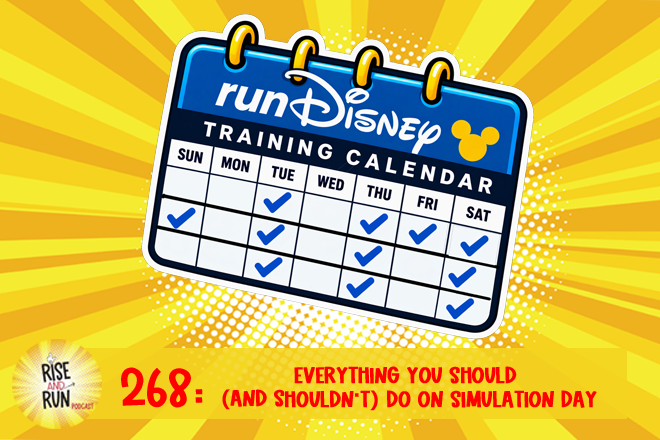
Ep 268 Everything You Should (and Shouldn’t) Do on Simulation Day
Thanksgiving week isn’t just turkey trots and family plans. For a lot of Run Disney runners, it’s the first true simulation weekend for the Dopey Challenge and Goofy Challenge, and it can be the most mentally draining part of marathon training.

If you’d like to introduce an upcoming episode, please reach out to us on our social media. You can also email us, or leave us a message on our hot-line (727-266-2344).
PRACTICE, PACE, & POOR DECISIONS
Everything You Should (and Shouldn’t) Do on Simulation Day
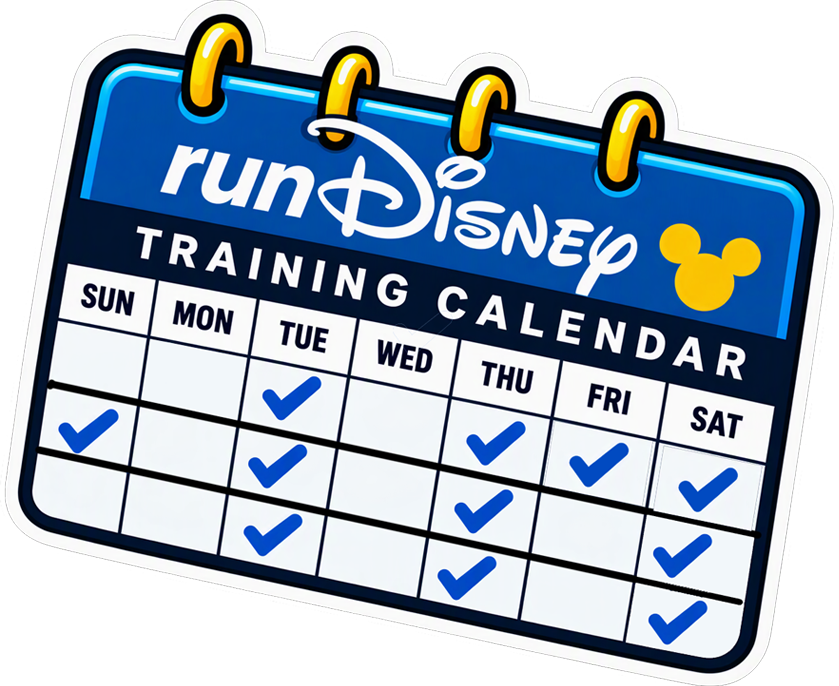
Marathon Weekend training gets real when the Run Disney simulation weekend lands right on Thanksgiving week. If you’re preparing for the Dopey Challenge or Goofy Challenge, the first true dress rehearsal often includes back to back long efforts like a 10-mile walk followed by a 23-mile run-walk-run, plus extra days for Dopey. These training simulations are tough because the race is still weeks away, the holiday calendar is full, and you’re doing it all at home without Disney energy. The key mindset shift is simple: the goal is not a perfect performance, it’s collecting data. Treat the weekend like a field test for pacing, time on feet, and how you respond on tired legs, because that information is what makes the next simulation and race weekend smoother.
Getting out the door is the first win, especially when family, travel, and food plans compete for attention. Make it easy by laying out your running gear the night before, setting multiple alarms, and having a clear start time you commit to like an appointment. Practice early wakeups so race morning feels familiar, even if you choose 4:00 a.m. instead of full Run Disney early. Safety matters in darker mornings: bright layers, a headlamp, and reflective gear can be non-negotiable. Community support helps too. Tools like Holler Hype can turn a lonely long run into a shared experience, and even training tech like Strava analysis or a deeper pace review can help you spot patterns you’d miss on feel alone.
Fueling and hydration are where simulation weekends earn their value. A practical rule of thumb is 20 to 30 grams of carbohydrates every 30 to 45 minutes, adjusted for your body, effort, and whether you use liquid carbs. Set a watch alert so you don’t “forget” when the miles get busy. Also practice the annoying but real Run Disney timeline: eat your pre-run breakfast, then wait like you would in corrals and on buses, so you learn what your stomach and bathroom timing actually do. If you plan to rely on on-course options, test what’s commonly provided, such as water and Powerade, and trial chews or beans during training. Recovery is part of the workout too: plan fluids, carbs, salt, and protein soon after finishing so you can get up and do it again the next day.
Just as important are the don’ts that prevent a spiral. Don’t skip the simulation unless you’re sick or injured, because it’s your best chance to identify issues before race day. Don’t beat yourself up if it goes sideways; training is supposed to reveal weak spots. Don’t compare your pace to others or to a past version of yourself, because that can wreck your headspace mid-run. Keep your mind occupied with playlists, podcasts, or audiobooks, and remember you “get to do this.” On the practical side, rotate shoes across the weekend so cushioning can rebound, and don’t debut brand-new shoes on the longest day. Finally, respect your speed limit. Going slower now reduces injury risk and helps you arrive at the start line healthy, which is the real goal of any runDisney training plan.
The Race Report Sponsored by Stoked Metabolic Coaching

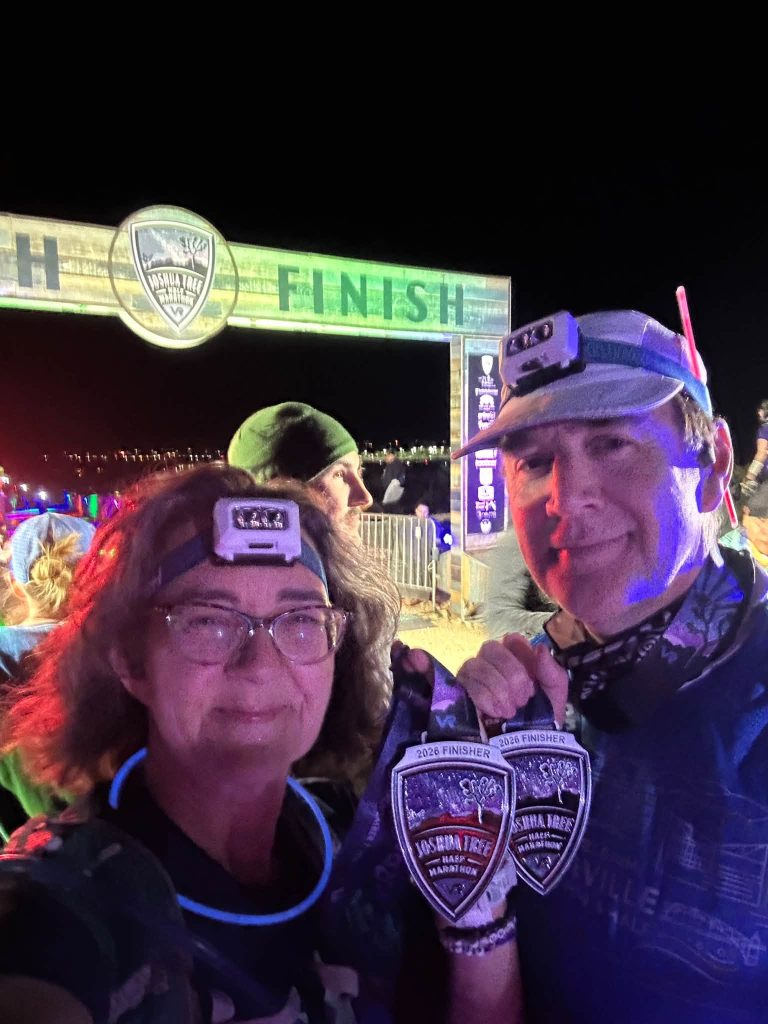
This week, Jennifer and Rick headed out to the Joshua Tree Half Marathon, one of the most unique races on the Vacation Races calendar. It’s the only event that’s both a trail race and a true nighttime race.
The course kept runners on their toes with constantly changing terrain, moving from pavement to packed dirt to deep sand and back again. Add in complete darkness after sunset, and it became a real adventure. Headlamps weren’t just helpful, they were essential.
While the darkness made it hard to appreciate the scenery during the race itself, it created an incredible atmosphere. The desert sky was filled with stars, and a few times they could even hear coyotes yipping somewhere off in the distance beyond the trail.
The next morning, Jennifer and Rick got the chance to explore the area and finally see the iconic Joshua trees they had raced past in the dark.
If you’re training for Marathon Weekend, Dopey, Goofy, or even your first half marathon, come hang with us, grab a few new tactics, and then tell us how your first simulation goes. Subscribe, share the show with a friend, and leave us a review so more runners can find the Rise and Run community.


Show Links
Rise and Run Podcast is supported by our audience. When you make a purchase through links on our site or social media channels , we may earn a affiliate commission.
Rise and Run Links
Rise and Run Podcast Facebook Page
Rise and Run Podcast Instagram
Rise and Run Podcast Website and Shop
Rise and Run Patreon
Runningwithalysha Alysha’s Run Coaching (Mention Rise And Run and get $10 off)
Sponsor Links
Magic Bound Travel
Stoked Metabolic Coaching
Affiliate Links
The Start Line Co.
Fluffy Fizzies
Mona Moon Naturals
Rise and Run Amazon Affiliate Web Page
Kawaiian Pizza Apparel
GoGuarded